My Role
UX Lead: product strategy,
research & wireframing
Industry
Finances
Product type
Native mobile app
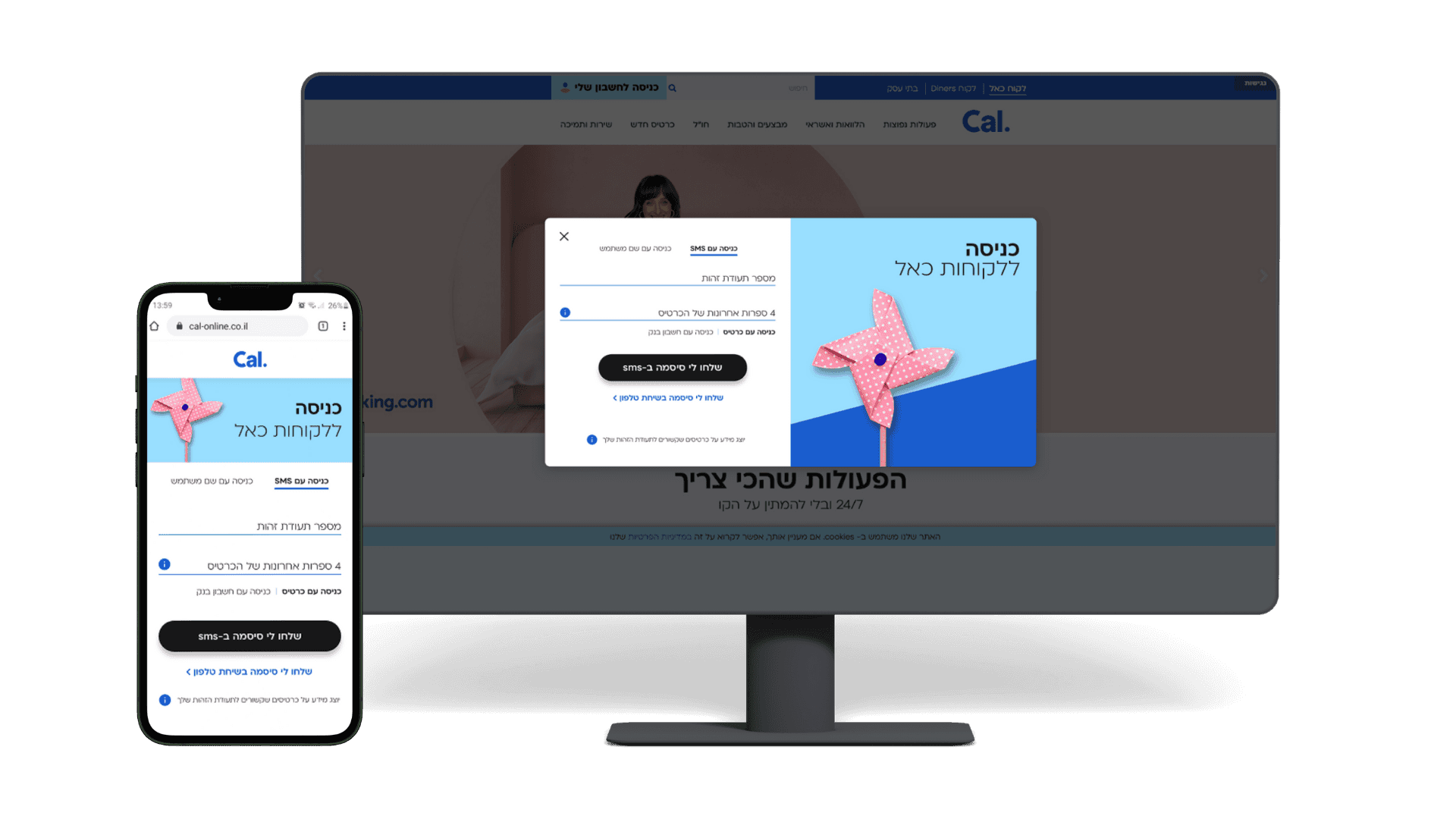
Cal's SMS alerts were costing the business millions annually, and frustrating users at the same time. The solution was clear: replace SMS with push notifications. But push only works if users opt in, and most don't. That was the real product problem I had to solve.
I led the strategy, research, and wireframing, working with a visual designer on UI execution.
Challenge #1
Getting users to opt-in
On iOS and Android, users must explicitly allow push notifications. Apps usually ask it on first launch, but at that moment, users haven’t yet seen value. As a result, most users decline, which negatively affect adoption rates.
Solution #1
Show value before asking
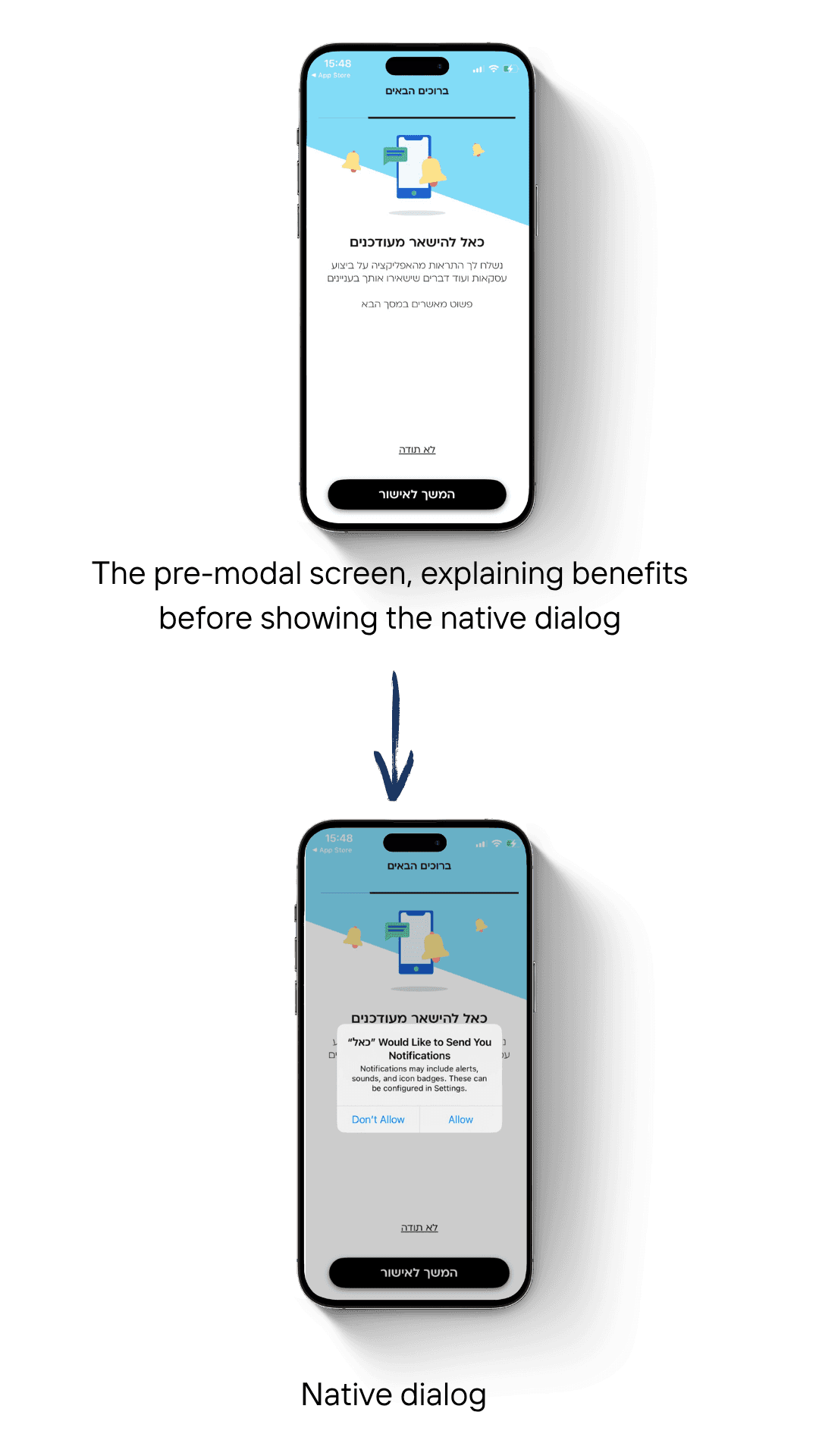
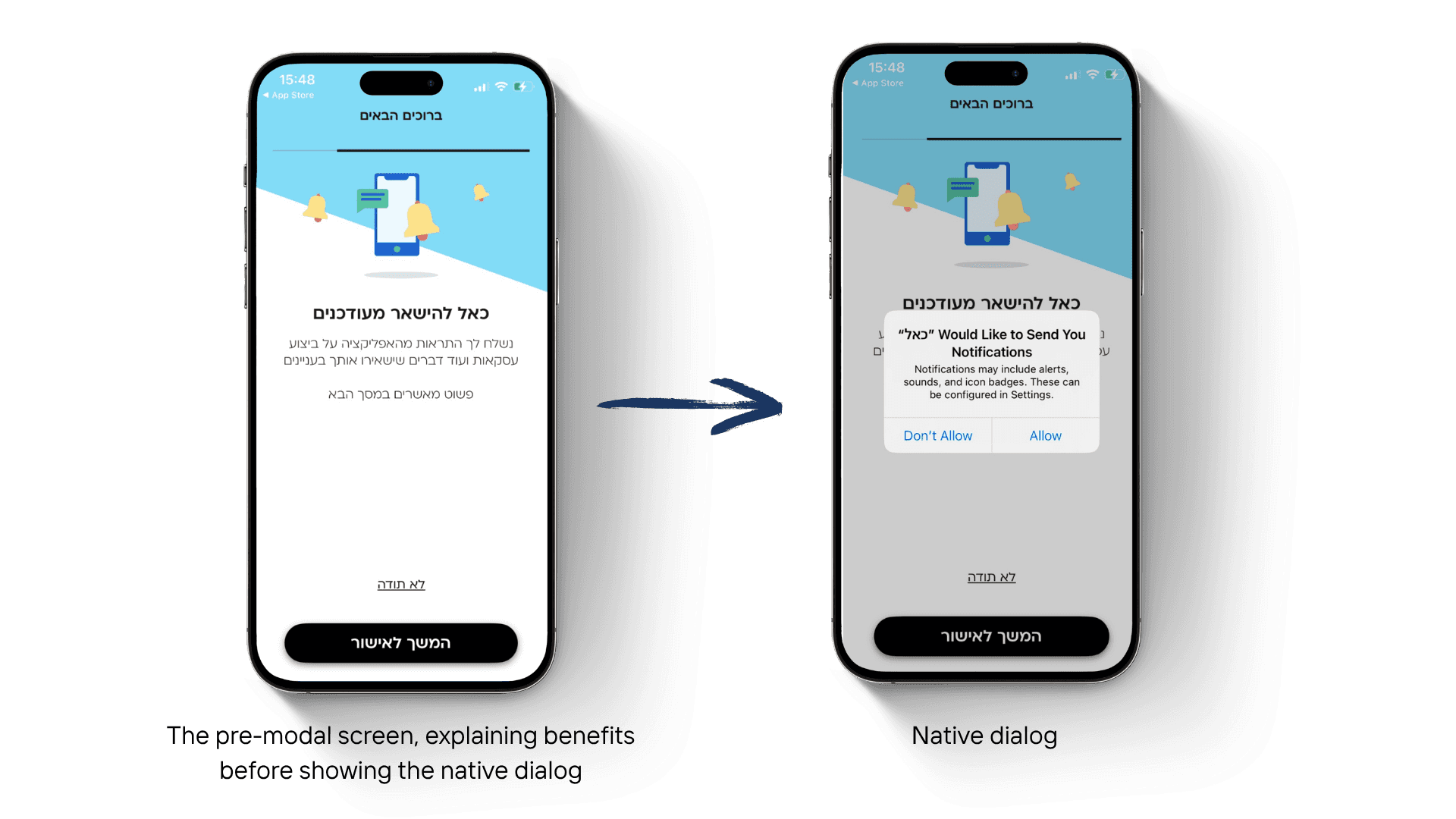
Knowing the challenge, I proposed a pre-modal screen that explained the benefits of opting in, shown only after the user had been active in the app for at least a month. This ensured that value was visible before the request. The screen acted as a warm-up before the native system dialog, following best practices in progressive disclosure.
Result: opt-in rates skyrocketed
Challenge #2
OS limitations on native prompts
As part of the research, I found out that both Apple and Google limit the number of successful calls to the native modal. If users dismiss it too often, the option is gone.
Solution #2
Provide a backup path
If the system dialog was unavailable, I designed a flow that redirected users to the app’s settings page, where they could enable notifications manually. This workaround ensured no one was locked out.
Results
Within half a year - adoption rates crossed
These results exceeded our goals and increased user satisfaction.
Phase 2: reduce overlap between SMS and Push
After solving the first challenge, we discovered another issue - SMS didn’t disappear. Users continued receiving both SMS and push noticications, duplicating costs and causing confusion.
Method
Group users and tailor their CTA
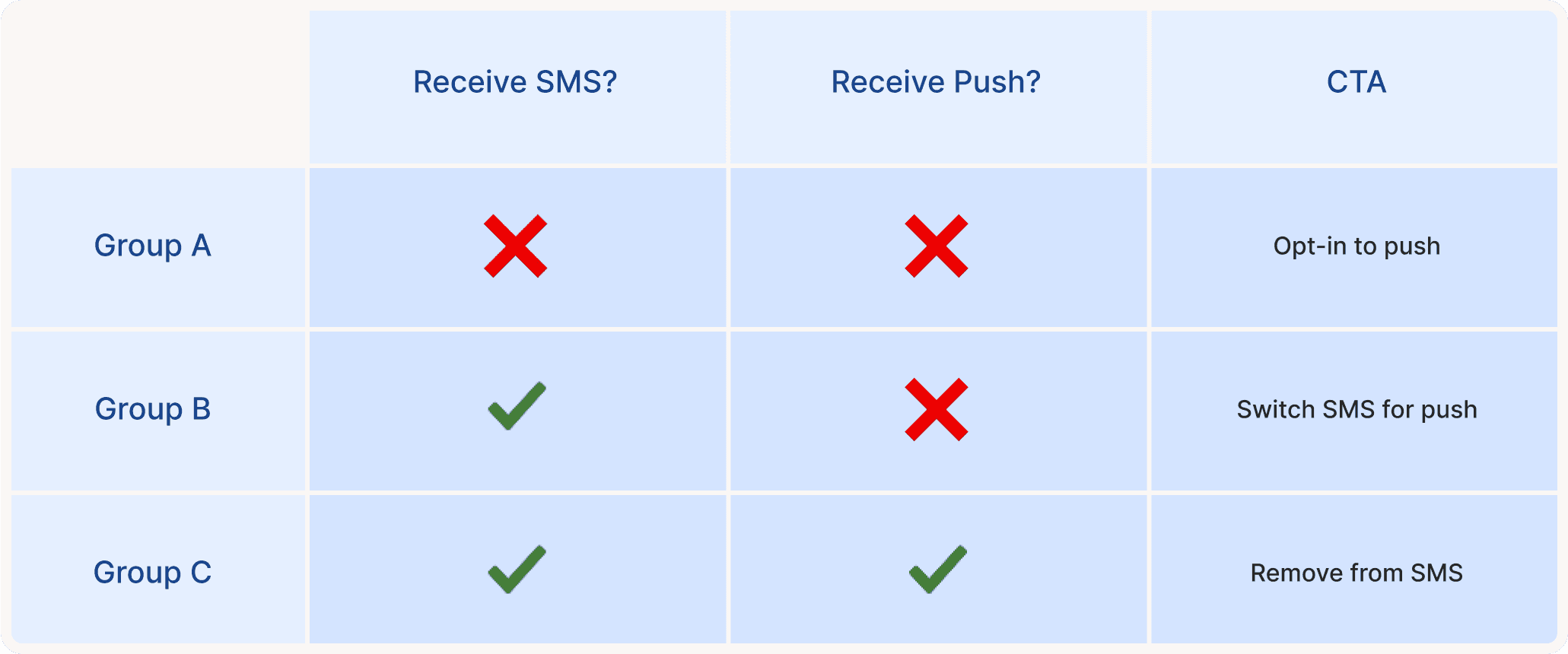
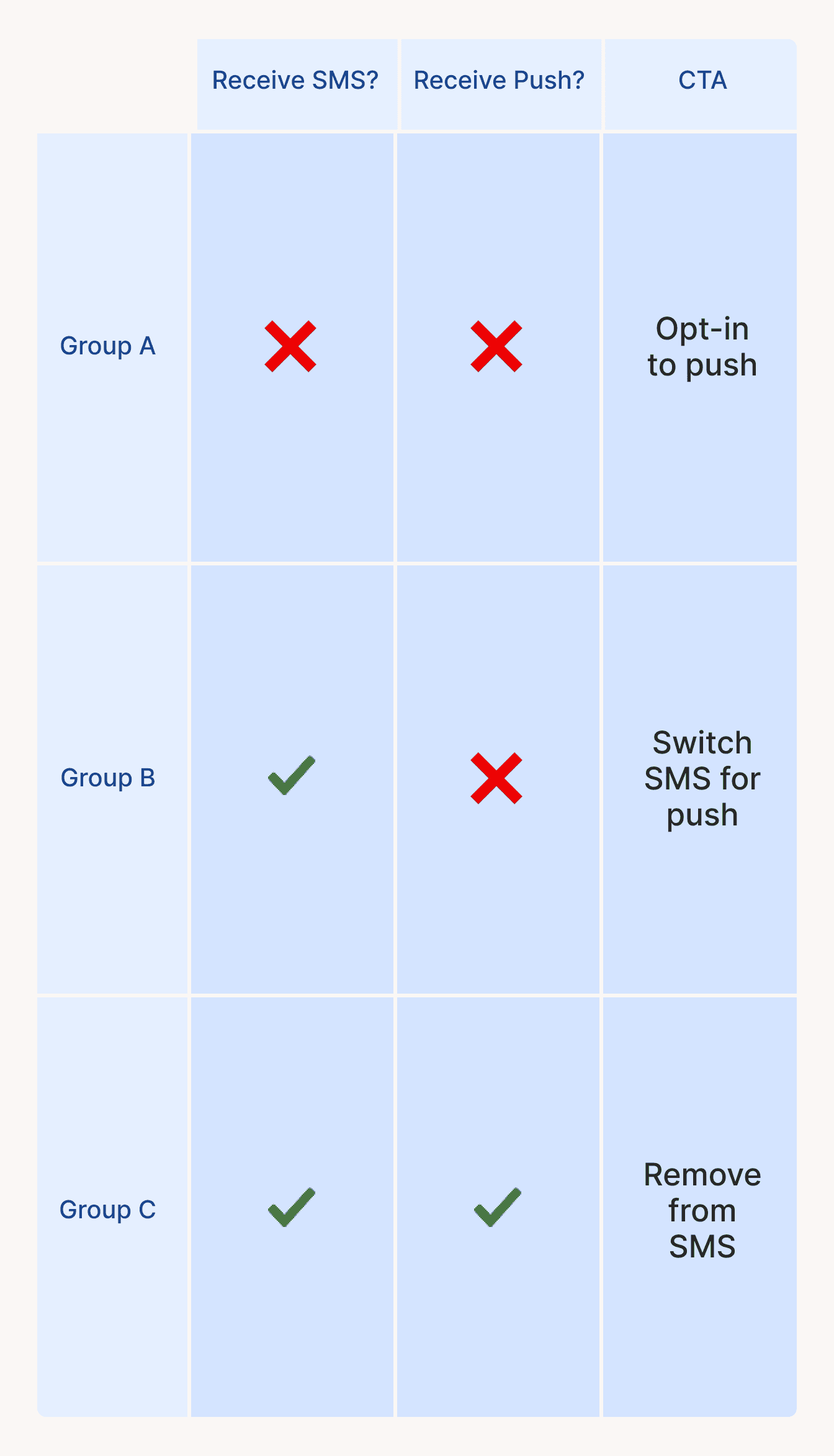
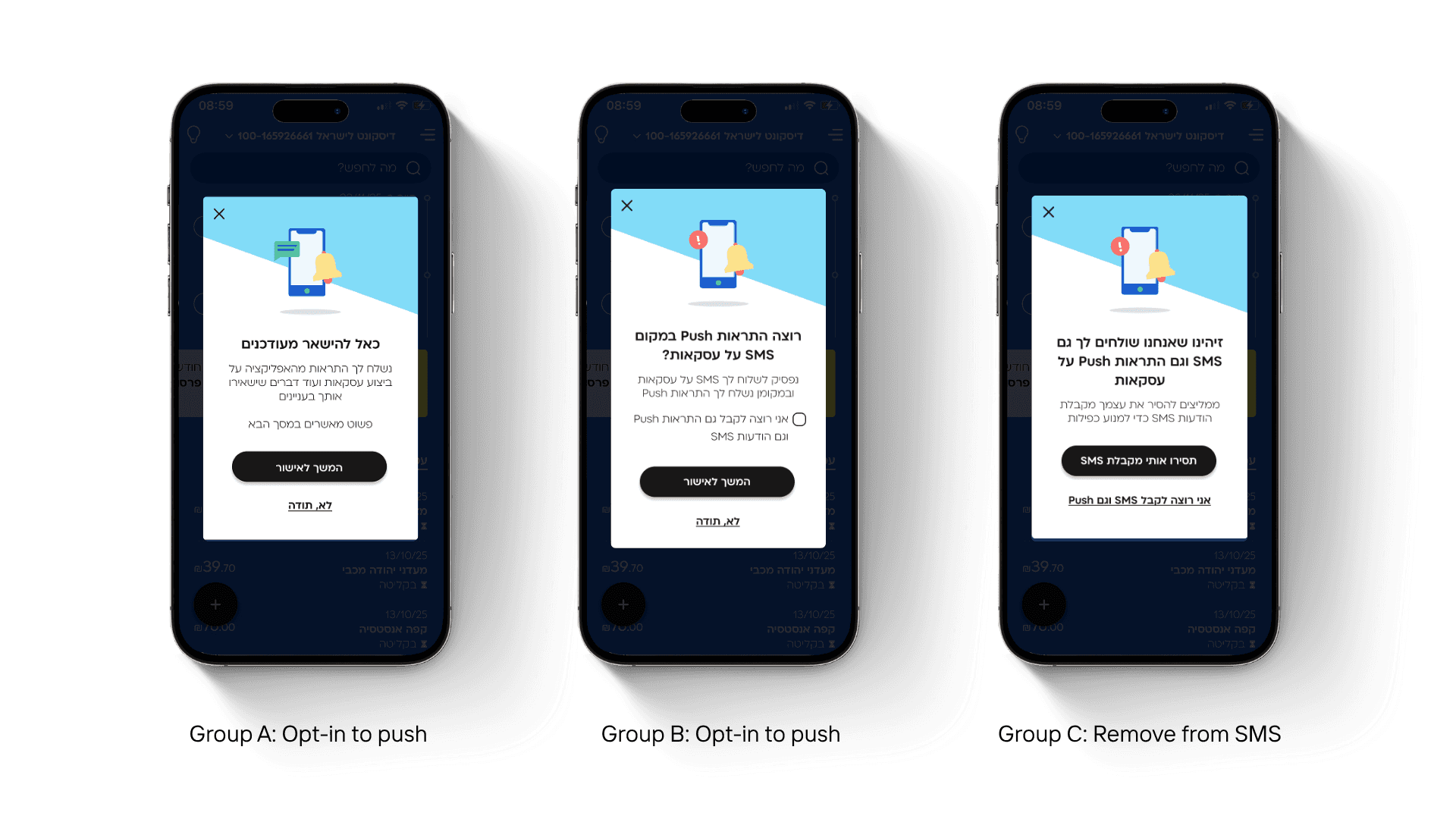
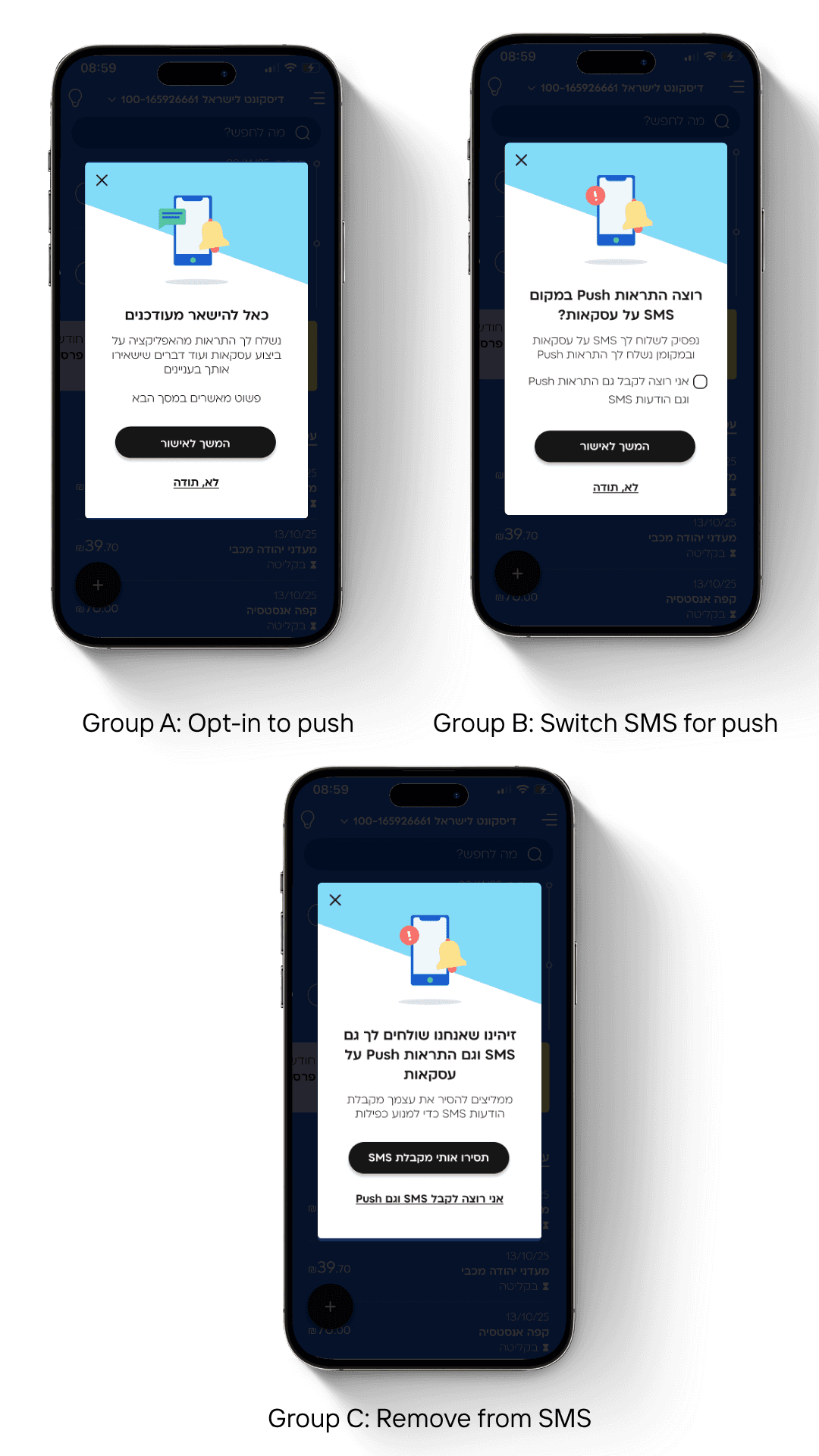
The goal was to to leave our users getting push notifications only. To do it - I divided them into 3 different groups with tailored CTA:
Results
Millions saved annually, higher user satisfaction
This project was a WIN-WIN: an unusual combo of enhanced customer satisfaction together with saving millions of shekels annually.
Reflection
Better UX, lower costs
This project showed me that behavior change requires timing and framing. By making the value clear before asking for commitment, and offering fallback paths, we converted reluctant users into adopters. It was a rare win-win: better user experience and massive cost savings.